



With just a few weeks left in 2025, financial gurus everywhere are scrambling to adjust their portfolios and squeeze out every possible tax advantage before they pop the champagne on New Year’s Eve. 🍾
What most average investors don’t realise is that some of the best tax-minimizing tricks aren’t the ones accountants talk about every April. They’re quieter, less flashy, and (when used properly) surprisingly powerful.
This year, two lesser-known methods once reserved for the rich elite are starting to hit the mainstream. And yes, it’s likely you can take advantage of them too. 💸
ETF “Swaps” (aka 351 Conversions)

ETFs have always been beloved for one reason — they’re incredibly tax-efficient.
But 351 conversions (often called ETF “swaps”) take that advantage to a completely different level. 📈
Simply put, big investors can exchange appreciated assets (like stocks) for shares in an ETF without triggering capital gains taxes.
This little manoeuvre, enabled by Section 351 of the tax code (originally meant for corporate transfers), has become a modern-day portfolio magic trick. ✨
Think of it as cleaning up your entire house by pushing everything into a walk-in closet. Nothing disappears — but it’s suddenly no longer a (taxable) burden.
Traditionally, this strategy was exclusive to institutional investors and people managing millions. But in 2025, more retail investors are accessing it through specialised advisors and ETF issuers who facilitate these swaps.
AKA, ask your brokerage about it today! ☎️

BUT!!!! Here’s where things get spicy. Rumor has it that lawmakers and the IRS have started raising eyebrows on this method, arguing that the loophole is simply too good and allows ultra-wealthy investors to dodge capital gains basically… forever.
Behind the scenes, there’s already talk of tightening the rules, limiting qualifying assets, or closing the door entirely. 😢
If anything, this is proof that it works and it’s powerful, but it may not be around forever. So, if you can use it, take advantage of it while you still can.
Direct Indexing
If ETFs are the “clean and simple” option, direct indexing is the custom-tailored couture version of investing. 📈
Basically, instead of buying an ETF that tracks the S&P 500, you buy all the individual stocks inside the index.

It’s essentially building your own personalised index — the same exposure, but with full control.
It’s like going from “buying a shirt off the rack” to “designing your own wardrobe.” You’re no longer stuck with one-size-fits-all.
In other words, want to feel like Warren Buffett? Skip the BRK-A, and buy all the stocks in the S&P 500 (or whatever index you like) directly in the exact same proportions. And just like that, congratulations! You are now the chairman, CEO, and sole shareholder of your very own Berkshire Hathaway-style empire. 😎
Why bother?
Because direct indexing lets you do something ETFs can’t, which is sell individual underperforming stocks to harvest losses (thus reducing your tax bill) while still keeping your overall market exposure.
For example:
If Apple drops 12% this year while the S&P stays flat, you can sell Apple, lock in the loss, buy a similar stock or ETF to maintain exposure, and repurchase Apple later. Result? Your taxes shrink, your exposure doesn’t.
Not long ago, this strategy was reserved for the wealthy elite with several accountants on speed dial, because managing hundreds of stocks was wildly time-consuming. But algorithmic portfolio software changed everything. 🤖
Now, anyone with a high five-figure or low six-figure account can play the same game.
Just a word of warning — the IRS watches this closely too. And wash sale rules still apply — the art is navigating them legally, not creatively.
Take Advantage While You Can
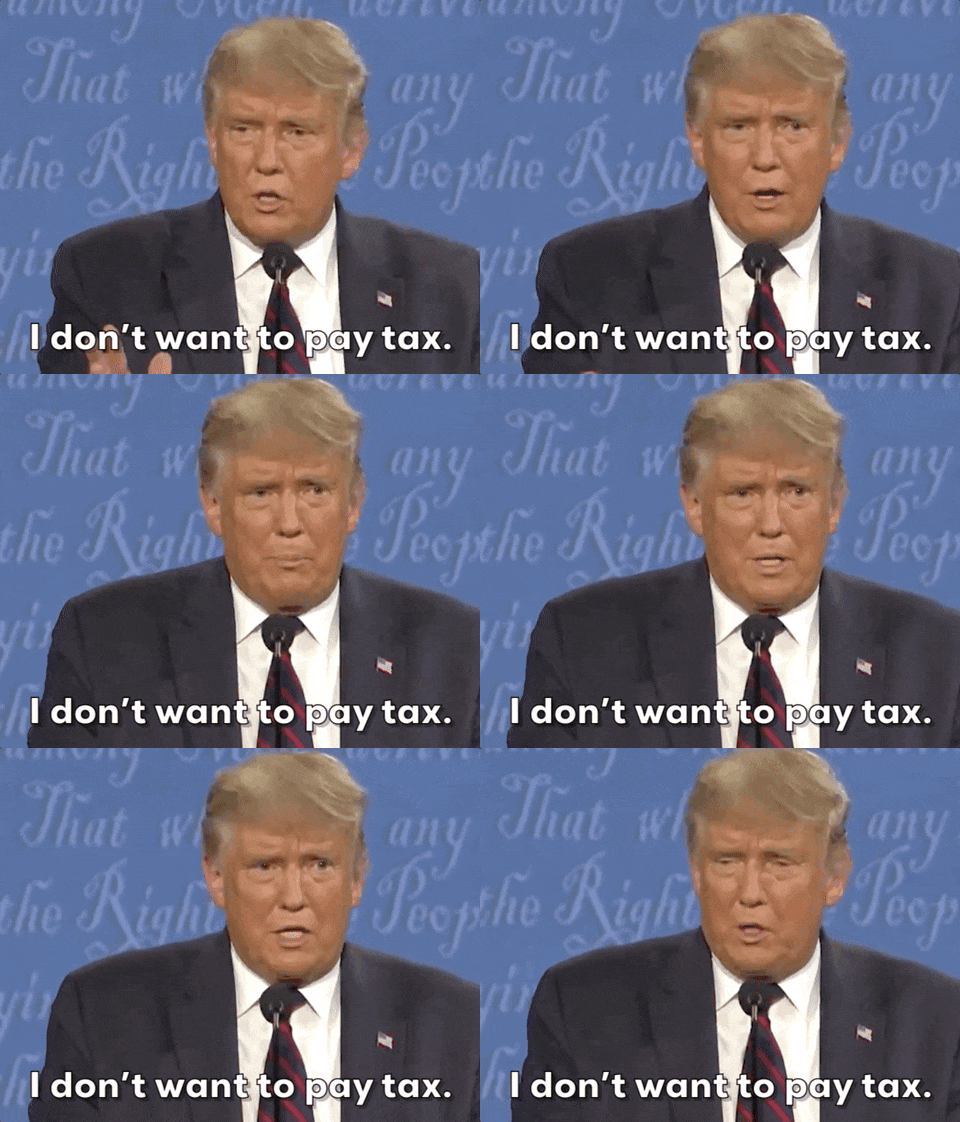
As 2025 comes to a close, investors aren’t just dumping losing stocks or topping up retirement accounts. They’re using advanced (almost sneaky) techniques to hide gains, harvest losses, and hand the IRS the smallest possible check.
To summarise, ETF swaps delay taxes. Direct indexing erases them.
Neither is magic. But both are powerful. 💰
And both may face tighter rules in the coming years as the Tax Man realises just how many people have learned to play the game better than Congress expected.


